🅱️ BOUNDLESS • 2021–2023
Building a platform for new immigration services
Boundless is a Seattle startup founded in 2017 with the mission to be the fastest, easiest and most affordable way to get a visa. Their original green card service was manual and inefficient, and in 2021 it was overhauled into a scalable immigration platform to expand into new visa types.
To be successful required addressing three major challenges:
- Users: how do we help them find the right visa pathway, show them we’re their best bet for filing successfully, and make an extremely hard process feel easy?
- Operations: how do we enable ops to process applications faster and more accurately?
- Business: how do we build a scalable platform that is flexible enough to withstand USCIS policy changes over time?


MY ROLE & IMPACT
As founding designer, I built the product foundation that let the company expand into multiple new immigration services—designing scalable, reusable customer-journey experiences (acquisition through filing) and internal ops tools that cut application costs ~18% and review time 75%, letting users file with a 99.7% success rate.
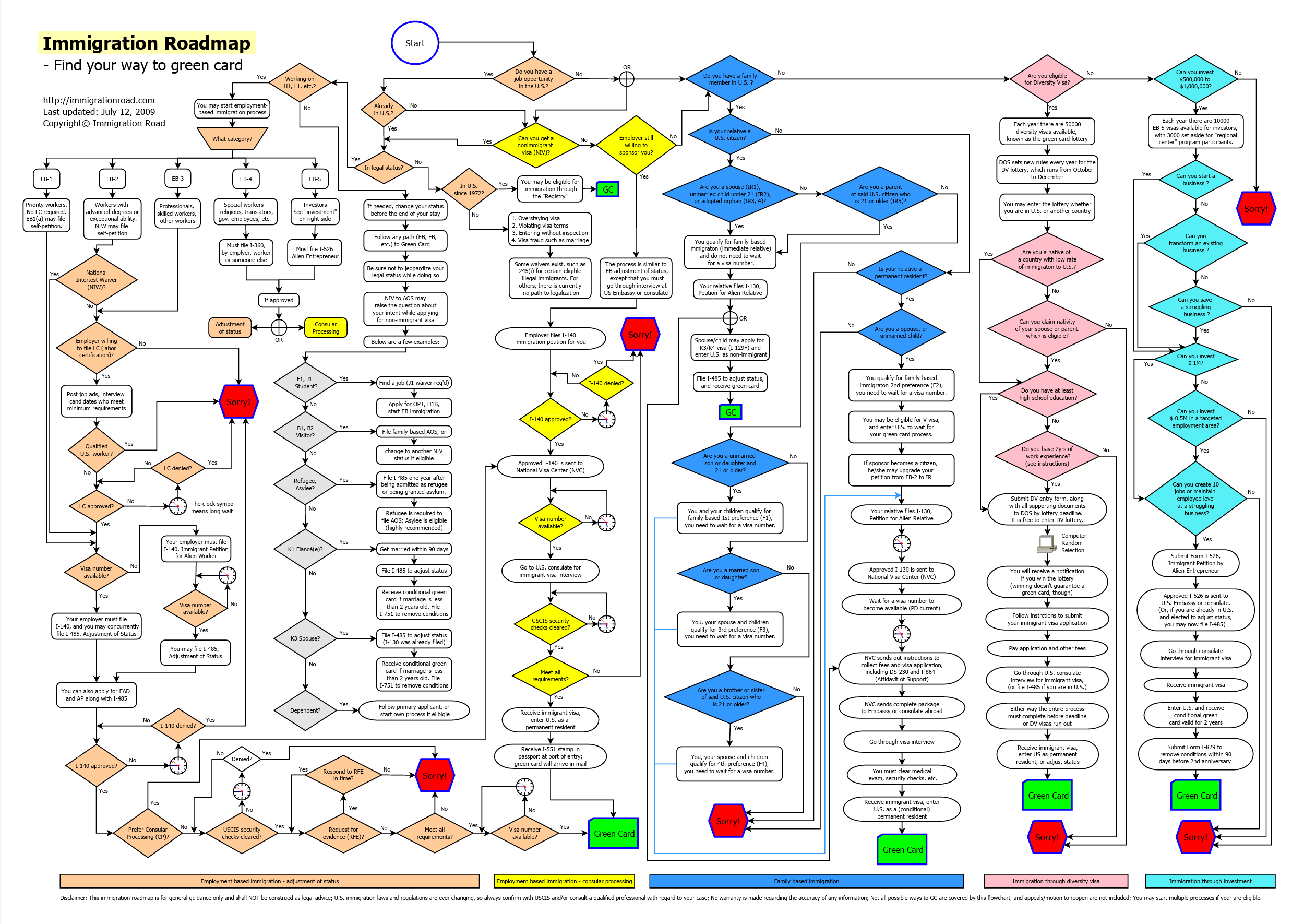
A real-world diagram showing the complexity of finding the right visa path.
We interviewed dozens of users and ops teammates, and audited the current workflows and tools. Then we broke the process into reusable moments and patterns adaptable across visa types.
Many immigrants had been burned by costly lawyers or scam services, while outdated USCIS resources made it nearly impossible to know the right visa path.
On the ops side, we needed tools that were easy to adopt, so teams could stay in contact with users, catch errors early, and assemble applications for fast USCIS approval.
Three principles guided design decisions:
Reduce uncertainty before asking for effort
Immigration applications are inherently stressful. Before asking users to complete complex tasks, the product should explain why the information matters and what happens next.
Capture the right information at the source
Because incorrect or incomplete information created expensive downstream operational work, the product should guide users toward accurate answers as early as possible.
Design the system, not the case
Rather than designing a single visa application as a one-off experience, establish patterns that can support multiple immigration services.
Building trust and converting leads into customers by guiding applicants to the right visa.
Over ~2 years, we created a product platform that guided users through their entire immigration journey, was scalable across new visa types, and was enabled by efficient operations tools for fast, successful filing.
In discovery, we learned the first huge hurdle is choosing the right visa type: picking incorrectly meant adding months to your timeline and wasting thousands of dollars.
Working closely with former USCIS officers and immigration attorneys, I turned dozens of visa logic trees into a guided, trust-building experience that converted leads.
Before purchasing, users could try the app and see how Boundless helped ace the visa interview.
A key insight from research was how much of a black box the USCIS interview was. Showing we knew how to prepare for it (and even hired former officers to help create our product) was a major way to build trust and acquire users.
Before purchasing, users could assess their risk, and see how Boundless helped mitigate it, through application flows that led up to checkout.
Just-in-time data points, social proof, and a risk assessment score provided tangible evidence that Boundless was legitimate.
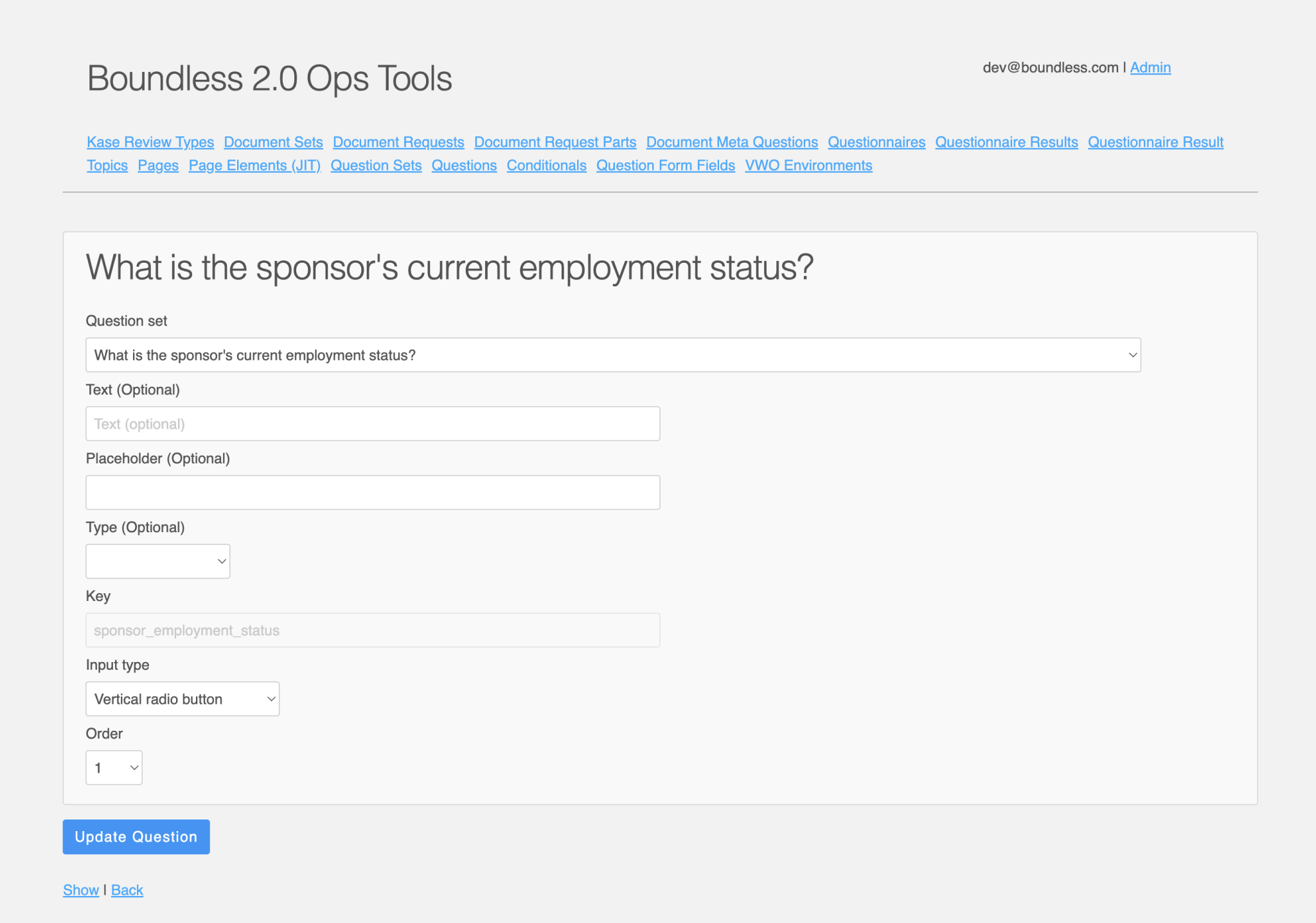
No-code ops tools made it easy to update applications, while UI improvements guided users towards quick and accurate completion.
Immigration application forms were overhauled into no-code admin tools the operations team could modify easily. In the UI, dozens of safeguards were added to help users complete them quickly and accurately.
Shadowing users exposed how overly flexible the forms were, allowing incorrect answers and documents that turned into operationally expensive review moments downstream. I created a guidance and double-check system, and worked with our legal team to re-write questions clearly and directly.
I collaborated closely with ops and engineering to create our questionnaire logic admin tool so we could pivot quickly whenever the government modified forms or document requirements.
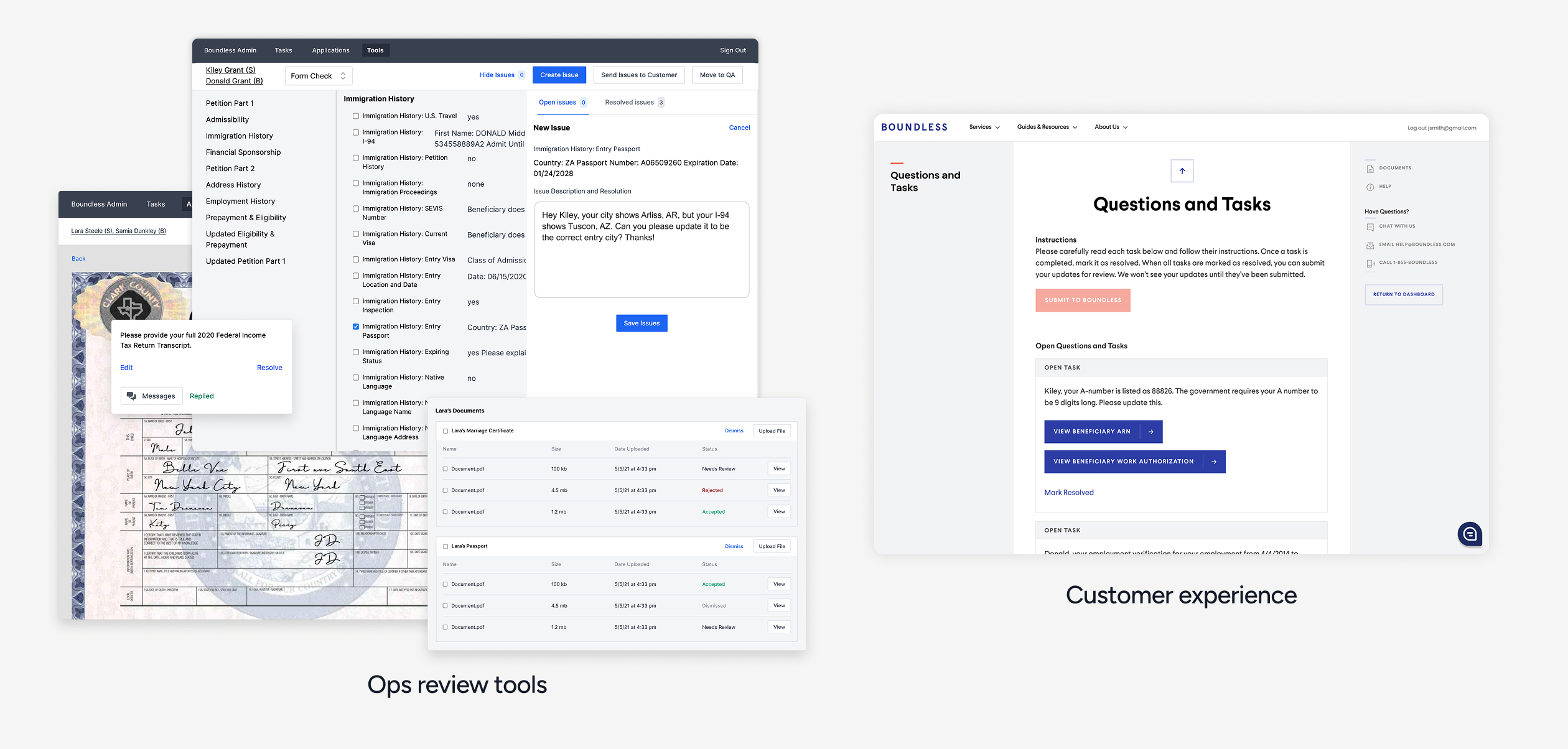
3 separate checks happened before filing—first their data, then their documents, then an attorney review—and each guided the user towards quick resolution.
Previously, application review was a long and challenging process after everything was filled out. Observing the ops team, I helped break it into multiple moments earlier, with improved resolution tools, leading to dramatically faster applications.
The new review experience allowed a visual pairing of the issue with a specific data field or document, along with pre-written issue text, for quicker identification by ops, and resolution by users.
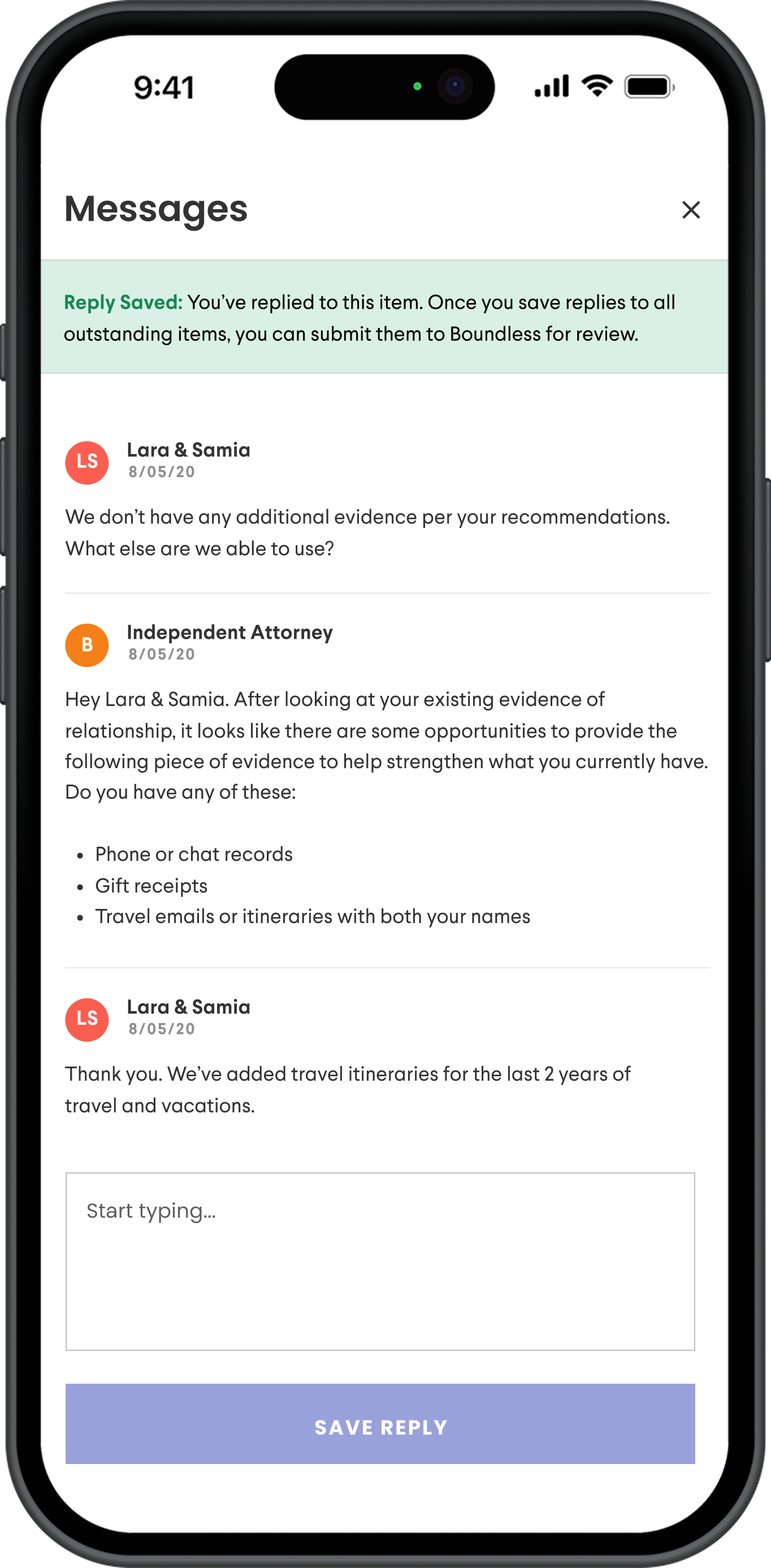
3-way review experience between the user, their client success manager, and their immigration attorney.
Review by their attorney was the #1 motivator for a user to feel confident in filing. The new platform optimized for the exact right time to pull in the attorney while reducing the number of hours they spent on each application.
The experience allowed the case manager to provide tips and improvements to their application, and pull the attorney into the conversation when needed.
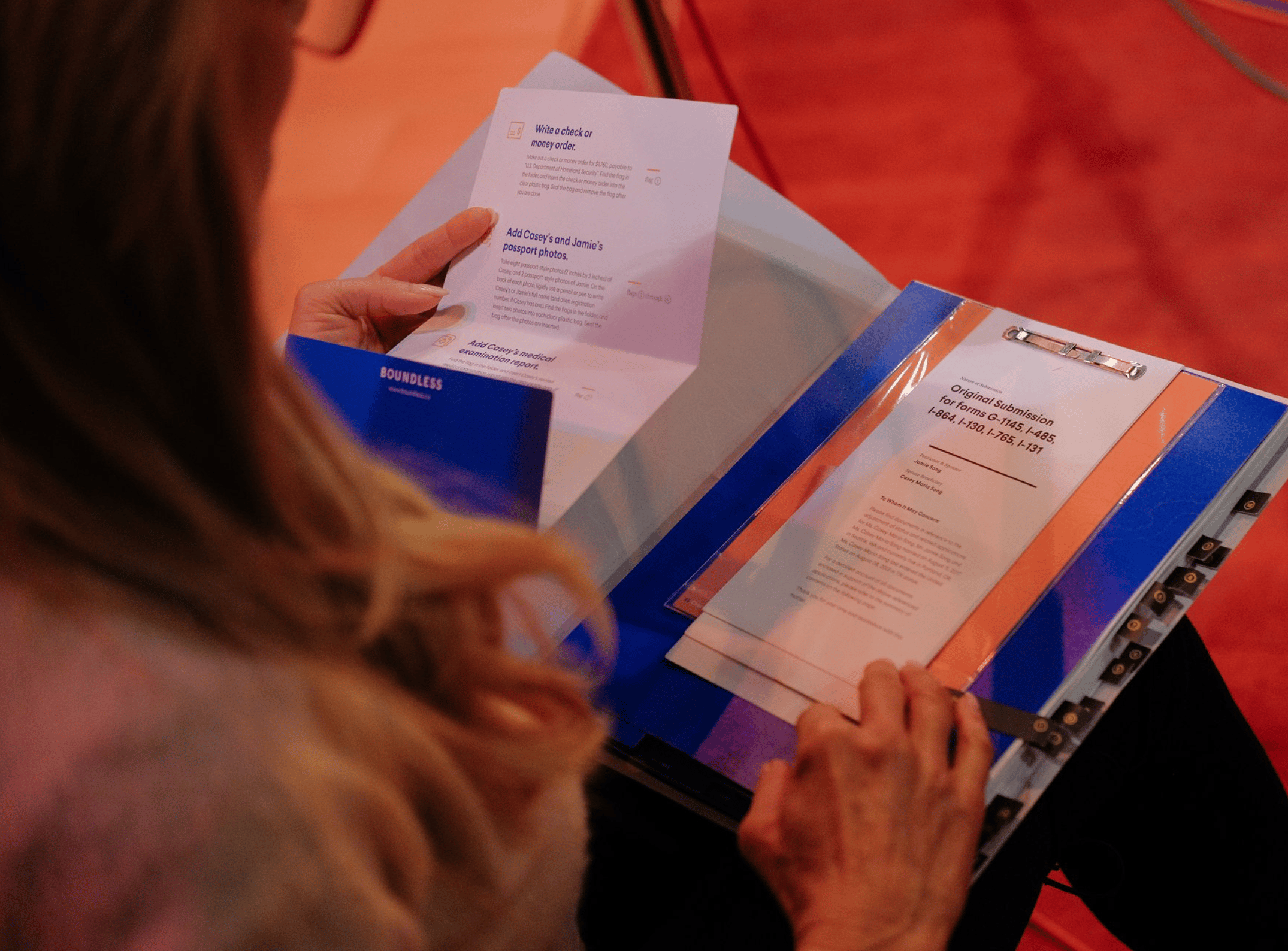
After filing their printed application, customers track its status in their dashboard.
Post-filing was our biggest blind spot: a long, anxious wait with zero visibility. We designed a tracker to close that gap, which improved user trust and became a growth lever: happier users returned for future visa applications, and their saved data made them faster to file.
Users could see estimated approval dates, upload information received from the government, and get to-dos to shorten wait times.
Operations leads can track customer applications, see their team’s workload, and assign tasks.
On ops, prioritizing applications and unblocking errors was messy and unorganized. I led the creation of a task tracking system that orchestrated applications and connected the team to the right tool (like the review tool) at the right time.
Client success manager leads could assess their workdays by seeing volumes, assign and prioritize applications to their teammates, track their status, and seamlessly switch between different tools from a single hub.
During my time at Boundless, the platform was used to launch 4 different application types, and led to millions in repeat business.
3 weeks


TIME TO FILE, DOWN FROM 12

99.7%


APPROVAL RATE
92%


REPEAT CUSTOMERS AOS → K1


🅱️ BOUNDLESS • 2021–2023
Building a platform for new immigration services
Boundless is a Seattle startup founded in 2017 with the mission to be the fastest, easiest and most affordable way to get a visa. Their original green card service was manual and inefficient, and in 2021 it was overhauled into a scalable immigration platform to expand into new visa types.
To be successful required addressing three major challenges:
- Users: how do we help them find the right visa pathway, show them we’re their best bet for filing successfully, and make an extremely hard process feel easy?
- Operations: how do we enable ops to process applications faster and more accurately?
- Business: how do we build a scalable platform that is flexible enough to withstand USCIS policy changes over time?


MY ROLE & IMPACT
As founding designer, I built the product foundation that let the company expand into multiple new immigration services—designing scalable, reusable customer-journey experiences (acquisition through filing) and internal ops tools that cut application costs ~18% and review time 75%, letting users file with a 99.7% success rate.
A real-world diagram showing the complexity of finding the right visa path.
We interviewed dozens of users and ops teammates, and audited the current workflows and tools. Then we broke the process into reusable moments and patterns adaptable across visa types.
Many immigrants had been burned by costly lawyers or scam services, while outdated USCIS resources made it nearly impossible to know the right visa path.
On the ops side, we needed tools that were easy to adopt, so teams could stay in contact with users, catch errors early, and assemble applications for fast USCIS approval.
Three principles guided design decisions:
Reduce uncertainty before asking for effort
Immigration applications are inherently stressful. Before asking users to complete complex tasks, the product should explain why the information matters and what happens next.
Capture the right information at the source
Because incorrect or incomplete information created expensive downstream operational work, the product should guide users toward accurate answers as early as possible.
Design the system, not the case
Rather than designing a single visa application as a one-off experience, establish patterns that can support multiple immigration services.
Building trust and converting leads into customers by guiding applicants to the right visa.
Over ~2 years, we created a product platform that guided users through their entire immigration journey, was scalable across new visa types, and was enabled by efficient operations tools for fast, successful filing.
In discovery, we learned the first huge hurdle is choosing the right visa type: picking incorrectly meant adding months to your timeline and wasting thousands of dollars.
Working closely with former USCIS officers and immigration attorneys, I turned dozens of visa logic trees into a guided, trust-building experience that converted leads.
Before purchasing, users could try the app and see how Boundless helped ace the visa interview.
A key insight from research was how much of a black box the USCIS interview was. Showing we knew how to prepare for it (and even hired former officers to help create our product) was a major way to build trust and acquire users.
Before purchasing, users could assess their risk, and see how Boundless helped mitigate it, through application flows that led up to checkout.
Just-in-time data points, social proof, and a risk assessment score provided tangible evidence that Boundless was legitimate.
No-code ops tools made it easy to update applications, while UI improvements guided users towards quick and accurate completion.
Immigration application forms were overhauled into no-code admin tools the operations team could modify easily. In the UI, dozens of safeguards were added to help users complete them quickly and accurately.
Shadowing users exposed how overly flexible the forms were, allowing incorrect answers and documents that turned into operationally expensive review moments downstream. I created a guidance and double-check system, and worked with our legal team to re-write questions clearly and directly.
I collaborated closely with ops and engineering to create our questionnaire logic admin tool so we could pivot quickly whenever the government modified forms or document requirements.
3 separate checks happened before filing—first their data, then their documents, then an attorney review—and each guided the user towards quick resolution.
Previously, application review was a long and challenging process after everything was filled out. Observing the ops team, I helped break it into multiple moments earlier, with improved resolution tools, leading to dramatically faster applications.
The new review experience allowed a visual pairing of the issue with a specific data field or document, along with pre-written issue text, for quicker identification by ops, and resolution by users.
3-way review experience between the user, their client success manager, and their immigration attorney.
Review by their attorney was the #1 motivator for a user to feel confident in filing. The new platform optimized for the exact right time to pull in the attorney while reducing the number of hours they spent on each application.
The experience allowed the case manager to provide tips and improvements to their application, and pull the attorney into the conversation when needed.
After filing their printed application, customers track its status in their dashboard.
Post-filing was our biggest blind spot: a long, anxious wait with zero visibility. We designed a tracker to close that gap, which improved user trust and became a growth lever: happier users returned for future visa applications, and their saved data made them faster to file.
Users could see estimated approval dates, upload information received from the government, and get to-dos to shorten wait times.
Operations leads can track customer applications, see their team’s workload, and assign tasks.
On ops, prioritizing applications and unblocking errors was messy and unorganized. I led the creation of a task tracking system that orchestrated applications and connected the team to the right tool (like the review tool) at the right time.
Client success manager leads could assess their workdays by seeing volumes, assign and prioritize applications to their teammates, track their status, and seamlessly switch between different tools from a single hub.
During my time at Boundless, the platform was used to launch 4 different application types, and led to millions in repeat business.
3 weeks


TIME TO FILE, DOWN FROM 12

99.7%


APPROVAL RATE
92%


REPEAT CUSTOMERS AOS → K1

